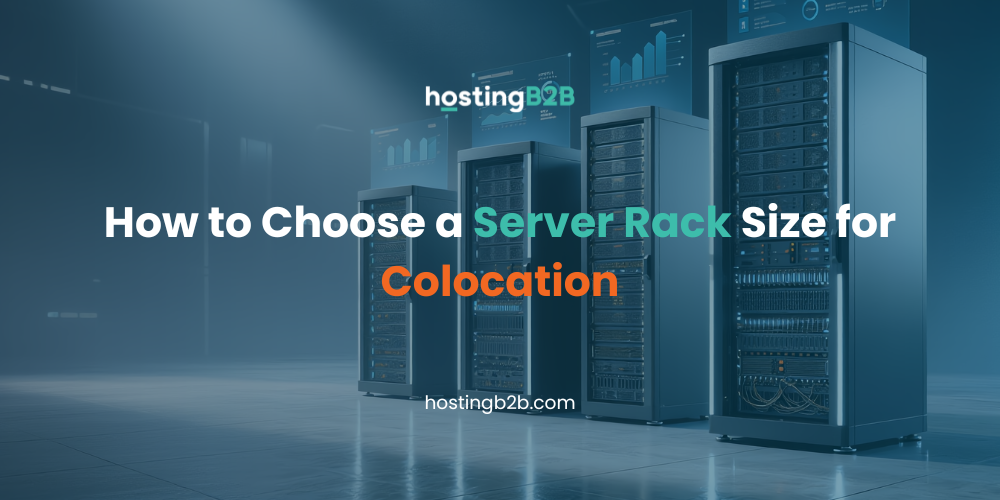
Choosing the right rack size shapes cost, scalability, and performance for any Colocation Hosting. Many businesses default to a full rack without first reviewing power needs or growth plans. As a result, they overpay for unused space or run out of capacity within a year. This guide covers the factors that determine the right rack size for your workload.
What Is a Colocation Rack Size?
Rack size refers to the height, width, and depth of the cabinet housing servers, switches, and storage inside a shared data center. Height is measured in rack units (U), where one U equals 1.75 inches under the EIA-310 standard (RackSolutions). Providers typically offer quarter, half, and full racks, plus custom high-density suites for larger deployments.
Key Factors When Choosing a Rack Size
Rack Height and Available U Space
Full racks commonly range from 42U to 48U. A 42U rack remains the industry standard because it balances capacity, airflow, and cable management. Therefore, most deployments start here before scaling up.

Width, Depth, and Access Space
Internal rail width follows the 19-inch EIA-310 standard, while external width typically spans 600mm to 800mm. Depth ranges from 1000mm to 1200mm. In addition, facilities need roughly 36 inches of front clearance and 24 to 36 inches of rear clearance for maintenance.
Power Density Requirements
Power density is now the main constraint in rack selection. Standard workloads typically draw 3 to 5 kW per rack, while AI and HPC workloads can require 20 kW or more (Ramboll). Consequently, confirm available power and cooling before committing to a size.
Weight and Load Capacity
A typical 42U rack supports 1,000 to 3,000+ pounds, depending on build quality. Always verify load ratings against your equipment inventory, particularly storage arrays and UPS units.
Growth and Scalability Needs
Businesses expanding within 12 to 24 months should plan for extra U space or power headroom upfront. Otherwise, migrating later adds cost and downtime risk.
Colocation plans (live monthly prices)
- Space · 1U included, up to 24U
- Power · 0.5 kVA (approx. 2 A)
- Bandwidth · 5 TB/month
- Network · 1 Gbps shared, 1 IP
- Setup · €800.00
- Space · 21U
- Power · 1 kVA (approx. 4 A)
- Bandwidth · 5 TB/month
- Network · 1 Gbps shared, 1 IP
- Setup · €1,600.00
- Space · 42U
- Power · 1 kVA (approx. 4 A)
- Bandwidth · 5 TB/month
- Network · 1 Gbps shared, 1 IP
- Setup · €2,800.00
Rack Size Comparison
| Rack Type | Typical Height | Typical Power Draw | Best Suited For |
| Quarter Rack | 10-12U | 1-2 kW | Startups, test environments |
| Half Rack | 20-22U | 2-3 kW | Small business production |
| Full Rack (42U) | 42U | 3-5 kW | Enterprise, regulated workloads |
| High-Density Suite | Custom | 10-100+ kW | AI, HPC, large-scale SaaS |
Common Use Cases by Industry
iGaming platforms often need full or high-density racks for real-time transaction volume and failover systems. Fintech providers typically favor full racks with dedicated circuits to support segmented, PCI DSS-aligned environments. SaaS companies often start with half racks and scale into suites as usage grows. Regulated enterprises generally prioritize full racks with private cage options for stronger access control.
Enterprise Deployment Considerations
Enterprises should evaluate factors beyond raw size. Redundant power feeds (N+1 or 2N) and diverse network paths reduce single points of failure. Additionally, layered access control, biometric entry, and 24/7 monitoring support stronger physical security. Confirm that a facility’s practices generally align with frameworks such as ISO 27001 or PCI DSS, as guidance rather than a guarantee. Finally, review backup and disaster recovery arrangements, since rack placement affects failover design.

Frequent Asked Questions
A 42U full rack, since it balances capacity, cost, and airflow management.
Standard racks draw 3 to 5 kW, while AI or HPC workloads often need 20 kW or more.
Yes, most providers support migrating to a larger rack or suite, though this requires planning around downtime and cabling.
The difference lies in available U space and power allocation, with quarter racks suited to smaller workloads and full racks suited to enterprise deployments.
Audit current equipment, power draw, and projected growth over 12 to 24 months, then match that to a provider’s rack tiers.
Ready to Right-Size Your Colocation Deployment?
HostingB2B offers flexible colocation hosting options, from quarter racks to private suites, backed by redundant power, tiered cooling, and 24/7 monitored security. Explore our Data Center Locations or compare colocation against our Dedicated Servers solutions to find the right fit for your workload.
Right-size your HostingB2B colocation rack
Conclusion
Selecting the right server rack size depends on equipment needs, power density, and growth plans rather than a one-size-fits-all default. By auditing requirements first and comparing rack tiers against redundancy and compliance needs, businesses can avoid costly mid-term migrations and support more reliable, scalable infrastructure.