In the world of iGaming, performance isn’t just a metric; it’s the heartbeat of your business. Whether you are running a high-traffic sportsbook, a live casino platform, or a complex betting engine, the underlying infrastructure determines your success. While many focus on CPU clock speeds or RAM capacity on your VPS Hosting, the Disk I/O often becomes the bottleneck before CPU or RAM.
Every millisecond of delay can affect hundreds of simultaneous players, leading to frustrated users and lost revenue. In fast-paced gaming environments, consistent and predictable storage performance is just as critical as processing power. Ensuring your disks can handle high-intensity read and write operations is key to maintaining a seamless player experience.
Why Disk Speed is Non-Negotiable for iGaming
In an industry where thousands of transactions occur every second, your database is under constant siege. Slow disk speeds lead to:

- Transaction Latency: Delayed bets or slow balance updates can drive players to competitors.
- Database Deadlocks: High-intensity write operations in iGaming environments require consistent throughput to prevent “lag” during peak hours.
- Slow Asset Loading: For slot games and rich media content, disk read speed directly impacts the player’s initial experience.
At HostingB2B, we don’t just “set and forget.” We benchmark. Here is how you can audit your Linux server’s storage performance like a pro.
Battle-Tested Commands for Disk Benchmarking
1. The Quick & Dirty: dd
The dd tool is pre-installed on almost every Linux distro. It’s perfect for a rapid sequential write test.
sync; dd if=/dev/zero of=tempfile bs=1M count=1024 conv=fdatasync
Why it matters: This tells you how fast your system can flush data to the physical disk, bypassing the cache.
2. The Professional Standard: fio
In iGaming, sequential speed is secondary to Random I/O. Databases don’t read files linearly; they jump around. fio (Flexible I/O Tester) is the industry gold standard for this.
sudo apt-get install fio -y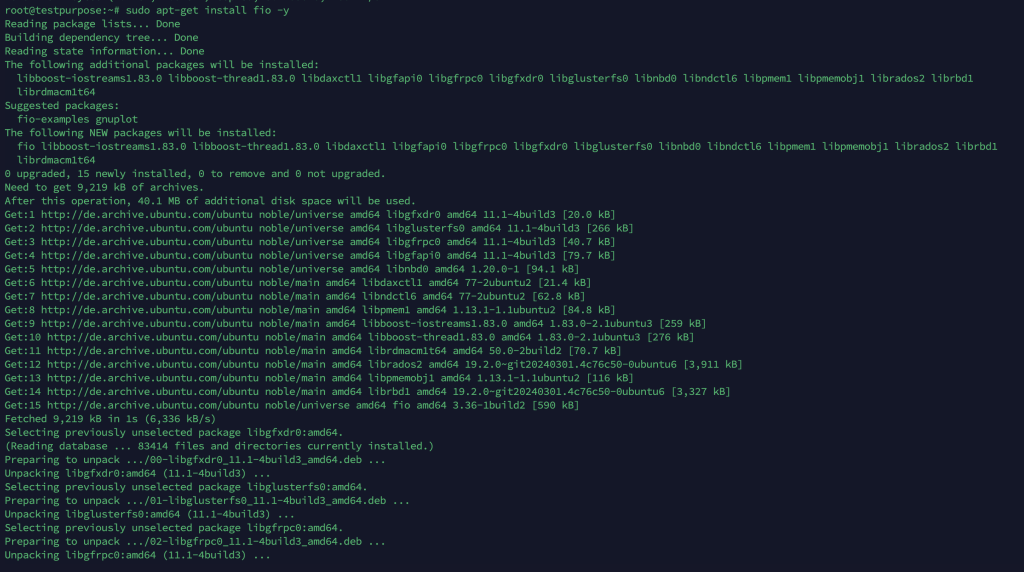
Run a random read/write test (4k blocks, 75/25 split)
sudo fio --name=demo-speed_Test --ioengine=libaio --direct=1 --rw=randrw --bs=4k --size=512M --numjobs=8 --runtime=60 --group_reporting
What to look for: Focus on IOPS (Input/Output Operations Per Second). For high-performance iGaming databases, you want to see five-digit IOPS numbers.
3. Low-Level Hardware Check: hdparm
If you need to see what the physical drive is capable of without the filesystem overhead:
sudo hdparm -Tt /dev/sdaPro Tip: Use this to verify that your NVMe or SSD drives are actually performing at their rated hardware specs.
The HostingB2B Edge
Monitoring disk speed shouldn’t be a one-time event. It should be part of your proactive maintenance — and with HostingB2B’s managed services, continuous performance monitoring is built into your hosting environment. If your current provider isn’t hitting the marks required for a seamless gaming experience, it might be time to migrate to dedicated server infrastructure that’s purpose-built for the iGaming and Fintech sectors.